How Cursor Was Born and Acquired by SpaceX
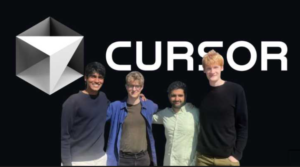
In the fast-paced world of technology and startups, stories of rapid success often capture the imagination. Yet, few tales are as compelling as that of Anysphere, the company behind the groundbreaking AI coding tool, Cursor. This is the story of four young MIT dropouts – Michael Truell, Aman Sanger, Sualeh Asif, and Arvid Lunnemark – all under the age of 27, who transformed an initial setback into a monumental triumph, culminating in a staggering $60 billion acquisition by SpaceX in 2026.
The Initial Spark: An AI Copilot for Mechanical Engineers
Every revolutionary company begins with an idea, and Anysphere was no exception. The journey of these ambitious founders initially set course on a different trajectory. Their first venture aimed to create an AI copilot specifically designed for mechanical engineers. An AI copilot, in essence, is an artificial intelligence assistant that helps users with complex tasks, often by generating code, suggesting designs, or automating repetitive processes. For mechanical engineers, such a tool could have streamlined design, analysis, and simulation, potentially revolutionizing the industry.
However, despite the promising premise, this initial concept did not gain the traction or achieve the viability the founders had hoped for. In the often-unpredictable landscape of startups, an idea, no matter how innovative, might not find its market or prove sustainable. This early challenge presented a critical juncture for Truell, Sanger, Asif, and Lunnemark.
The Crucial Pivot: Embracing AI-Powered Software Development
What defines successful entrepreneurs is not just their ability to generate ideas, but their agility and willingness to adapt. Faced with an unsuccessful initial product, the four founders made a pivotal decision. A “pivot” in startup terminology refers to a strategic shift in a company’s business model, product, or target market, often in response to market feedback or internal evaluation. It’s a bold move that can breathe new life into a struggling venture.
The MIT dropouts wisely chose to pivot their focus from mechanical engineering to the burgeoning field of AI-powered software development. This strategic shift was instrumental. Instead of assisting mechanical engineers with their designs, their new direction focused on enhancing the very process of creating software itself using artificial intelligence. This meant developing tools that could write code, debug, refactor, and assist developers in a myriad of ways, fundamentally changing how software is built.
The Rise of Cursor: An AI Coding Giant
This pivot led to the creation of Cursor, an AI coding tool under the umbrella of their company, Anysphere. While the specifics of Cursor’s functionalities are proprietary, it can be inferred that it significantly enhanced developer productivity and efficiency through intelligent automation and assistance. The market’s reception to Cursor was overwhelmingly positive. The tool rapidly gained prominence, transforming Anysphere into a multi-billion-dollar company in an impressively short span of time. This rapid growth underscored the immense demand for advanced AI solutions in software development and the team’s ability to execute their vision effectively.
SpaceX Acquisition: A $60 Billion Milestone
The extraordinary success of Anysphere and its flagship product, Cursor, did not go unnoticed by industry giants. In 2026, Anysphere was acquired by SpaceX for an astounding $60 billion. This acquisition figure is not merely a testament to the financial success of the company, but also to the perceived strategic value of Cursor’s AI technology to SpaceX. SpaceX, known for its ambitious ventures in space exploration and satellite internet, likely saw Cursor’s AI capabilities as crucial for accelerating its own internal software development, optimizing operations, or perhaps even integrating AI into future spacecraft and systems.
The acquisition for such a colossal sum highlights the premium placed on cutting-edge AI innovation and the disruptive potential of tools like Cursor. For four individuals who had not yet reached their late twenties, this was an unprecedented achievement, marking them as titans in the tech world.
Lessons from a Failed Idea: Adaptability and Vision
The remarkable journey of Michael Truell, Aman Sanger, Sualeh Asif, and Arvid Lunnemark offers invaluable lessons for aspiring entrepreneurs and established companies alike. Their story is a powerful reminder that failure is often a stepping stone, not a roadblock. Abandoning an unsuccessful initial idea, coupled with a keen ability to adapt to emerging technologies and market needs, can fundamentally transform a startup’s fortunes.
Their success with Cursor and Anysphere is a testament to the power of resilience, strategic pivoting, and the relentless pursuit of innovation. It underscores the profound impact that young, driven individuals can have on the global technological landscape, proving that sometimes, the most successful path begins with a brave change of direction.